



The Most Profitable Gym Business Models in 2026
28/03/26
The UK fitness industry has become increasingly competitive, and in 2026, profitability isn’t simply about opening a gym and filling it with equipment. The gyms that succeed are built around clear business models; ones that balance pricing, positioning and operational efficiency.
If you’re planning to open a gym, it’s important to understand not just what the most profitable models are, but how they actually work in practice within the UK market.
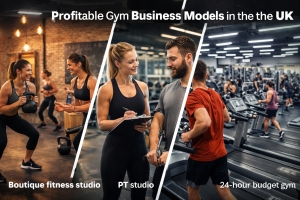
Boutique Fitness Studios
Boutique gyms are currently one of the most profitable models for independent operators in the UK.
These gyms focus on a specific type of training such as strength and conditioning, functional fitness, or small group PT and build their entire business around that niche.
How the model works:
-
Members typically pay a premium monthly fee (£100–£200+) or purchase class packs
-
Sessions are structured (e.g. 6–12 people per class) and run multiple times per day
-
One coach can manage multiple members at once, increasing revenue per hour
For example, a class of 10 members paying £150/month equates to £1,500 from a relatively small group. Multiply that across multiple sessions and time slots, and revenue builds quickly without needing a large membership base.
Because boutique gyms require less space and equipment than commercial gyms, overheads are lower, meaning higher margins if the model is executed well.
Personal Training Studios
Personal training studios are one of the simplest and most effective ways to build a profitable gym business in the UK.
These spaces are designed specifically for coaching, rather than general access.
How the model works:
-
Revenue is generated through 1-to-1 or small group PT sessions
-
Clients typically pay per session or via monthly packages (£200–£800+)
-
The gym operates on bookings rather than open access
A single PT delivering 25–30 sessions per week at £40–£60 per session can generate significant monthly revenue. Add multiple trainers or small group sessions, and this scales further.
The key advantage is efficiency.
You don’t need large premises or hundreds of members. Instead, you focus on delivering a high-value service to a smaller number of clients, which suits many UK locations where space and rent are limiting factors.
Hybrid Gym Models
Hybrid gyms combine elements of different models, making them one of the most flexible and resilient options in the UK.
They typically offer:
-
Standard gym memberships
-
Small group training
-
Personal training services
How the model works:
-
Base membership provides access to the gym (£30–£60/month)
-
Upsells include PT sessions and group training packages
-
Different services run at different times of day to maximise space usage
For example, quieter daytime hours may be used for open gym access, while evenings are reserved for higher-value group sessions.
This layered approach allows you to generate income from multiple sources, rather than relying on a single revenue stream.
It’s particularly effective in the UK, where relying purely on low-cost memberships is difficult due to competition from budget chains.
Niche & Specialist Gyms
Niche gyms focus on a specific audience or training style, allowing them to stand out in a crowded market.
Examples include strength gyms, women-only facilities, Hyrox-focused training spaces, and athlete performance centres.
How the model works:
-
The gym targets a clearly defined audience
-
Programming, branding and equipment are tailored to that niche
-
Pricing is often higher due to the specialised offering
Rather than trying to attract everyone, these gyms build a strong community around a shared goal or identity.
In practice, this often leads to:
-
Higher retention rates
-
More engaged members
-
Greater willingness to pay
In the UK, where competition is high, this level of differentiation is often what drives profitability.
24-Hour Budget Gyms (With Caution)
The 24-hour gym model is well established in the UK, but it operates very differently to the other models.
How the model works:
-
Low monthly memberships (£15–£30)
-
High volume of members (often thousands)
-
Automated access systems reduce staffing requirements
Revenue is generated through scale. The business relies on a large number of members paying monthly fees, with the understanding that not all members will use the gym regularly.
However, this model is dominated by major operators like PureGym and The Gym Group.
For independent gym owners, entering this space requires significant investment in:
-
Large premises
-
Extensive equipment
-
Marketing to reach high membership numbers
While profitable at scale, it’s generally a higher-risk model in the UK.
Online Coaching & Digital Add-Ons
Online coaching has become an important addition to many UK gym businesses.
How the model works:
-
Clients receive training programmes, support and check-ins remotely
-
Services are delivered via apps or online platforms
-
Pricing is typically monthly (£50–£200+)
This model allows you to generate income without being limited by physical space or location.
Many gyms use online coaching as a secondary revenue stream, complementing in-person services. It’s particularly useful for retaining members who move away or prefer a more flexible option.
What Works Best in the UK?
The UK market is shaped by strong competition from low-cost chains and a relatively price-sensitive customer base.
Because of this, independent gyms tend to perform best when they avoid competing on price and instead focus on value.
Models that combine:
-
Higher pricing
-
Strong member experience
-
Efficient use of space
…are typically the most profitable.
For most gym owners, this means boutique, PT-focused, or hybrid setups.
Final Thoughts
In 2026, the most profitable gym businesses in the UK are those that are built with intention.
They don’t try to be everything to everyone. Instead, they focus on a clear model, deliver it consistently, and structure their pricing and operations around it.
If you’re planning to open a gym, take the time to understand how each model works day-to-day, not just in theory.
Because profitability isn’t just about the idea. It’s about how well that idea performs in the real world.
Browse by category
Recent posts
Talk to our team
Whether you're opening a new gym, expanding your facility
or upgrading your exercise equipment, speak to
our commercial gym specialists today.
 01691 888 050